
Based on the weather forecast for the next few days, it was an absolute 'no brainer' according to Lord Twynyrodyn to use today for this particular walk. He had decided to lead the expedition into the Black Mountain to locate the site of the MF509 Wellington Bomber for a second time.

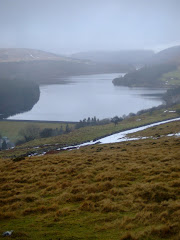
The start of the path leading to the mountain is accessed via the surface car park at Dan-Yr-Ogof caves. As we gained altitude we were able to see Fan Gyhirych across the valley and Madam Patti's castle nestled on the valley floor. We also encountered the first of five separate groups of youths on the Duke of Edinburgh's award scheme!

Thankfully the ground underfoot was exceptionally dry that made the walking really easy. As we approached the site from the south his Lordship decided that based on his compass bearing it was time to leave the drovers path and head into the wilderness.

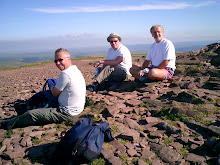
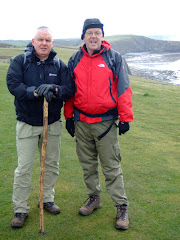
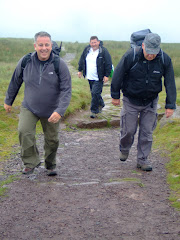
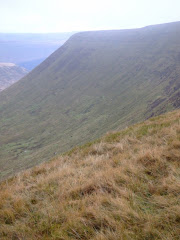
We entered a valley with no sign of even a feint footpath and his Lordship decided that we needed to gain height to the top of the ridge to have any chance of finding the site. As we stood at the top of the ridge Wandering pointed in a south-westerly direction and asked Lord Twynyrodyn whether that was the location - where a group of four other men were standing.

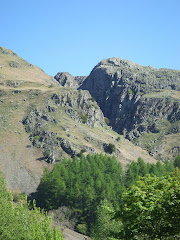
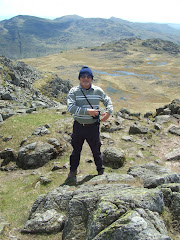
As we made our way to the site the remains of the Wellington bomber became clear. The gun metal gray of the bodywork blends almost naturally with the limestone outcrop that makes it really difficult to differentiate between the wreckage and the surrounding rock formations.

On the night of 20th November 1944, as Vickers Wellington MF509 from the 22nd OTU at Wellesbourne Mountford made its way over Wales on a night cross country exercise problems developed in the starboard engine. The aircraft began to lose height due to icing and crashed into Carreg Goch, all six aircrew aboard were killed.
In the village of Ynyswen, Eric Price and some friends heard aircraft engines and witnessed a fiery glow in the mountains. The following day they were discussing the report that an aircraft had crashed in the mountains, the report was later confirmed by the authorities.

Three days after the crash, Eric Price decided to explore the crash site. He and his dog traveled up the sheep’s path which ran along the mountain range until reaching the location of the wreck. While exploring the remains of the Wellington, Eric spotted something that seemed out of place amongst the heaps of twisted metal and burnt fabric. After picking up a small piece of the Wellington’s wing, he noticed a rectangular piece of white card. Upon further inspection, the object was revealed to be a photograph that had somehow been spared from the crash and subsequent fire. The photograph was of a solitary airman, there was no name or any other identification found on the photograph.

Not wanting to leave the photograph to the elements, Eric Price put it in his pocket. Not certain who the airman in the photograph was or whom he should return it to, Eric kept it in safe keeping for over 61 years.
Even after 66 years there is still a large amount of wreckage scattered around the site.
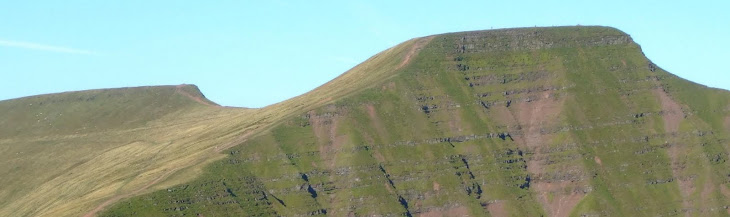
After spending a leisurely forty minutes eating our lunch we decided to ascend the ridge, crossing an excellent example of a limestone pavement, to view the remains of a Vampire jet on the flank of Fan Brycheiniog - through a pair of binoculars!

Refreshments to quench the thirst were taken at the Pen-Y-Cae Inn. Surprisingly two people who obviously live in the local community admitted that neither of them had visited the site.
Photographs taken on this walk can be viewed here. Select 'slide-show' for automated viewing.