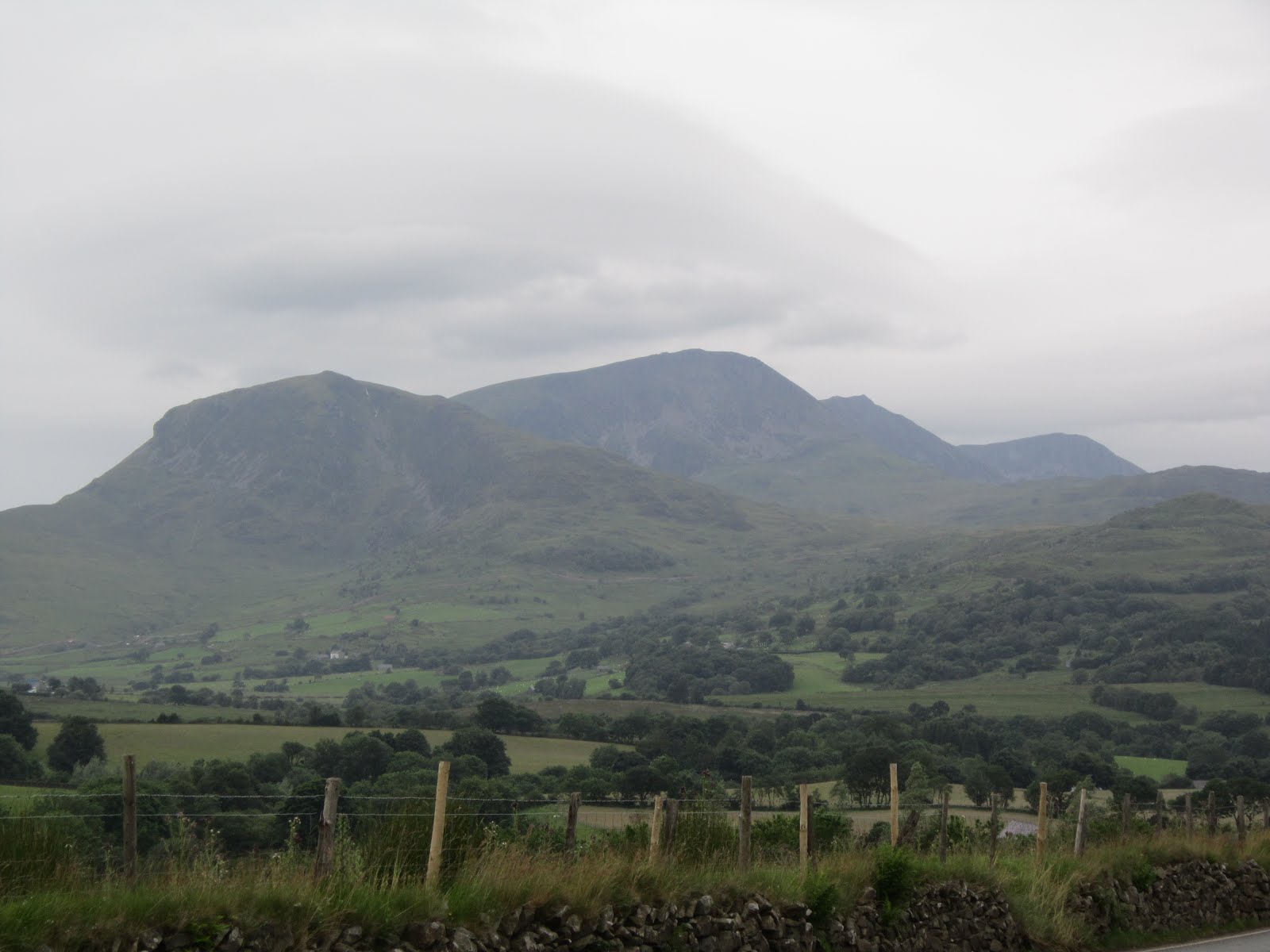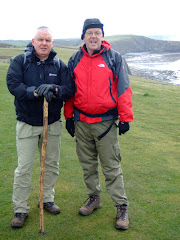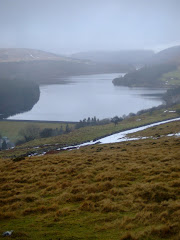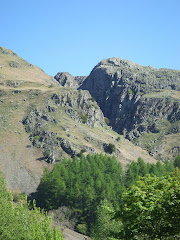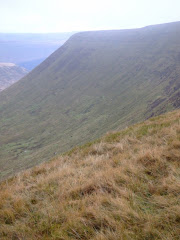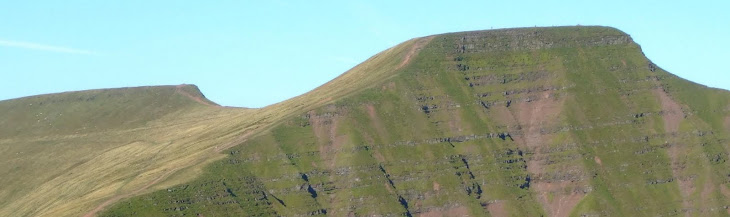
Pen-Y-Fan from Cribyn
Learn to fall in love with the mountain not just the summit

Wednesday, August 1, 2012

Wiggins wins Olympic Time Trial


Bradley Wiggins wrote his name into Olympic and cycling history at Hampton Court with a superb gold medal in the men's time trial. He was now won more Olympic medals than any other Briton: seven in total, including four gold. Team Sky rider Chris Froome won a bronze medal.

Wiggins, who also won the Tour de France less than two weeks ago, destroyed the field with a sensational ride to cover the 44km course in 50min 39.54 seconds, an impressive 42 seconds ahead of the the world time trial champion Tony Martin from Germany, who took the silver medal in 51:21.54.

There was further joy for Great Britain when Froome, who was the main support rider to Wiggins in the Tour de France, fought his way round the course to take the bronze medal, at an average speed of just over 30mph to finish in 51:47.87.

Wiggins's also equalled the achievement of his boyhood hero Miguel Indurain in winning the Tour de France and the Olympic time trial.

He produced a beautifully balanced effort over a course which was packed all the way by supporters waving union flags, a once in a lifetime experience for a British rider. Police estimate that there were in excess of 300,000 lining the roads.

"I cannot put it into words, I wouldn't do it justice," Wiggns said. "It’s really incredible to win an Olympic Gold in your home city. When you win in the velodrome there are three or four thousand people cheering. Here, around the streets of London, the noise is just amazing. I don't think anything will top that. It's just been phenomenal."

Tuesday, July 24, 2012

Summer Weather


One of the reasons for the lack of trip reports has been the appalling weather. It was exactly two years ago that we had the driest Spring for 80 years, see previous post on the local reservoirs.

The last of the hosepipe bans in the southeastern corner of England were lifted a couple of weeks ago, and not before time. Normally the water year begins in October, when the reservoirs and water-bearing rocks beneath our feet begin to fill up again after the summer. Since March 2012 we have had an excess of 220mm of rainfall and the reservoirs are full.

It has all been the fault of the mid-latitude jet stream, that powerful conveyor belt of winds in the upper atmosphere.

The jet stream is located in the zone of biggest temperature contrast. These huge temperature contrasts (between the Artic and Equator) provide the energy which drives this narrow stream of powerful winds. The jet stream also controls the behaviour of the depressions that we see on the TV weather charts, and these depressions routinely bring widespread rain, and often strong winds.

Throughout the 1990s and the early-2000s the jet stream blew powerfully from the west, and the distribution of weather across the UK was relatively normal, with just a few exceptional droughts and wet periods. Since 2003, however, the flow has been sluggish and meandering, and as a result we have experienced long periods when the weather has appeared to get stuck in a rut. So we had heat-wave summers in 2003 and 2006, appalling floods in 2007 and now in 2012, and an extended drought in 2010 and 2011.

It seems that the six-week long period of thick cloud and heavy rain may be drawing to a close. The weather should take a turn towards something rather drier, sunnier and warmer.

The last time the Olympics came to London, in 1948, we had a dreadful summer, apart from two weeks at the end of July. King George VI opened the Olympic Games on the hottest day of the year with 35C (95F) approached in London and the Home Counties. But sadly that year the rains returned in August.

Sunday, July 22, 2012

Champs-Élysées, Paris

Bradley Wiggins of Team Sky became the first Briton in the history of this iconic bike race to win the 'maillot jaune' of the Tour de France, winning the title as he crossed the finish line on the Champs-Élysées. Team-mate and fellow Brit Mark Cavendish took his fourth consecutive final stage win.

Wiggins won the General Classification with an overall gap of 3 minutes 21 seconds over his most dangerous rival, Sky teammate Christopher Froome. Vincenzo Nibali of Liquigas-Cannondale took the other podium place, finishing third overall 6 minutes 19 seconds behind Wiggins.

The British rider, who had spent the entire race in either the Yellow Jersey or second place overall, emphatically demonstrated his intentions with two time trial victories, winning against the clock on stages 9 and 19 to virtually guarantee the title. The only rider who was able to sustain any challenge was his teammate and lieutenant, Froome.

Friday, July 13, 2012

Cadair Idris


It was an extremely early start for the intrepid duo as the headed north on the A470 towards Gwynedd and the 'Chair of Idris' protruding into the low cloud at 893 mtrs.


The chosen route, the Pony Path, begins in the north from either Dolgellau or the Mawddach estuary, is the easiest but the longest of the main trails. Its length from the mountain's base is 5 kilometres (3.1 mi) with a 600 metres (2,000 ft) climb.


The Idris in question is usually taken to be a giant from Welsh mythology who was said to have used the mountain as an enormous armchair to gaze at the stars. Alternatively, it may refer to Idris ap Gwyddno (or Gweiddno), a 7th-century Meirionnydd prince who won a battle against the Irish on the mountain.


Lord Twynyrodyn experienced periodic breathing difficulties on the upward route that seemed to evaporate when chatting to some pretty Swiss girls. The cloud cover also cleared as the summit was conquered.


There was a tricky little scramble for the duo over the loose scree to reach the summit.


Refreshments were taken at a local hostilry at the base of the mountain before the departure for home.

Friday, June 29, 2012

Crash Into Me

From the 'Crash' album released in 1996, the single reached #2 in the US album charts before the band recorded 6 consecutive #1 albums in the American LP charts over the next 16 years.

The song has also been covered by various artists including Stevie Nicks formerly of Fleetwood Mac, who performed it on her 2008 Soundstage episode. Her version was later released as a single.

The video was recorded live at Continental Airlines Arena in East Rutherford, New Jersey

Sunday, May 27, 2012

Haga District


The morning of our final day in the second largest city in Sweden was spent wandering around the Haga district and a general wide sweep of the main harbour area.

Fortunately, most of the stores were closed for the Sabbath so very little money was actually spent!

Haga is renowned for its 19th century-atmosphere and cafés. Originally a working class suburb of the city with a rather bad reputation, it was gradually transformed into a popular area for both tourists and local residents.


The district was first established in the mid-17th century by Queen Kristina, making it Göteborg's first suburb. It was not until the 1840's that new industries were established in Göteborg, which led to an influx of workers into Haga, creating the first worker's district in the area. This led to a housing shortage during the 1870s and by the 1920s, after extensive expansion of the district, the population of the area began to decline.

A redevelopment plan drawn up in 1962 for Göteborg, which included the demolition of buildings in the district, in 1970 led to the founding of the Haga Group, with the aim to preserve the original architecture of the area. Between 1973 and 1977, demolition work decreased due to the pressure of the locals. This also moved the authorities to help restore some of the buildings which were already in disrepair.


Feskekôrka is a fishmarket by the Rosen Lundskanalen in the heart of Gothenburg. Feskekôrkan was opened on 1 November 1874 and the name is derived because it is compared to a church. In the 18th century, fishing was the most important industry for the city. In the past the fish market was a significant meeting point for residents of the city. However, in 1731 the Swedish East India Company was founded, and the city flourished due to its foreign trade with highly profitable commercial expeditions to Asian countries.


The harbour area developed into Sweden's main location for trade towards the west, and with Swedish emigration to North America increasing, Gothenburg became Sweden's main point of departure.


A lovely city with excellent facilities but rather flat!

Saturday, May 26, 2012

Aspero Island


After a typical Swedish breakfast we used the local transport service in the city which is absolutely superb, with trams that are both punctual and extremely clean, to rendezvous with Wandering Junior.


The weather was wonderful and we were able to use a ‘rover’ travel card to catch the tram from the city centre to the coast before boarding a ferry at Saltholmen on the short but pleasant 15-minute journey to Aspero Island (402 inhabitants in 2010).


This is part of the Southern Gothenburg Archipelago, which has 5,000 permanent and another 6,000 summer residents.


It was fascinating to learn about the traditional Swedish life-style, as families retreat to the coast for the long Summer holidays to the wooden clapper-board holiday homes. The Swedish are very supportive of a good work/life balance.


The only mode of transport allowed on the island was bicycle or a motorised type of golf buggy!

We spent an hour or so walking from the jetty to the main ‘street’ that consisted of the only general store on the archipelago! Enjoying an ice-cream beside the glistening crystal clear waters. Catching the ferry back to the mainland from the second jetty on the island later in the afternoon.